Group and Count
This puzzle uses a collection of items that are clearly similar but have an attribute that is clearly different. In the example below, a gaming table setup provides expected items like cards and chips.
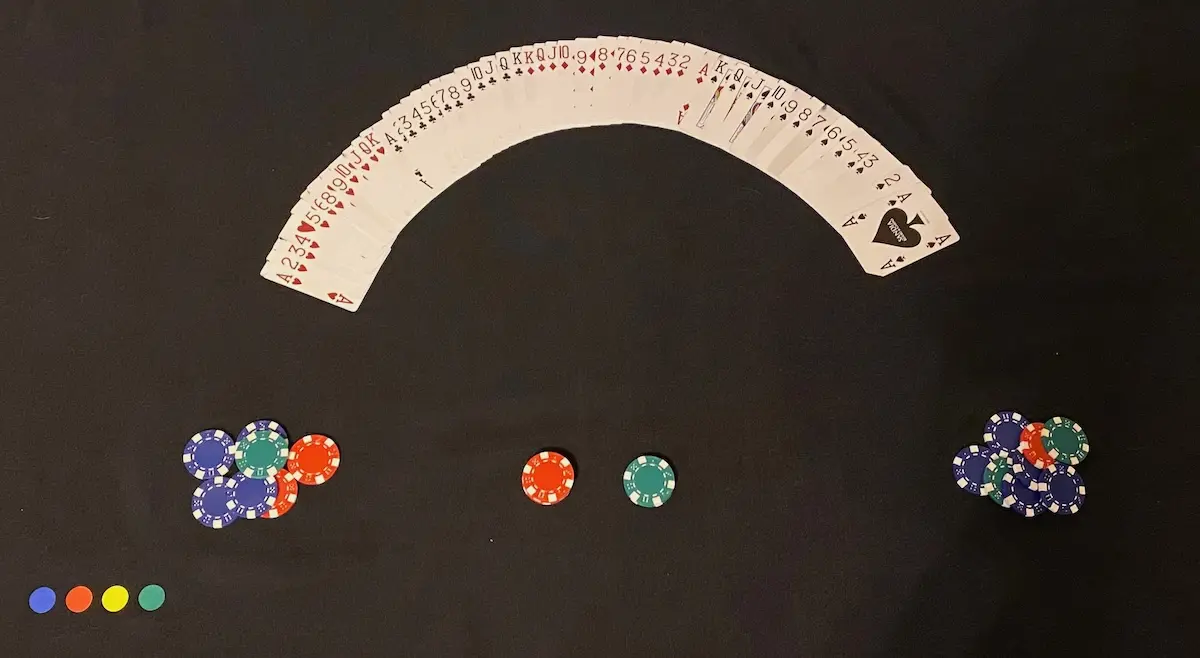
All of the chips come from the same set and are easily recognized as related. However, it is also obvious that the chips come in different colors. The first step of the puzzle is to collect the chips by color.
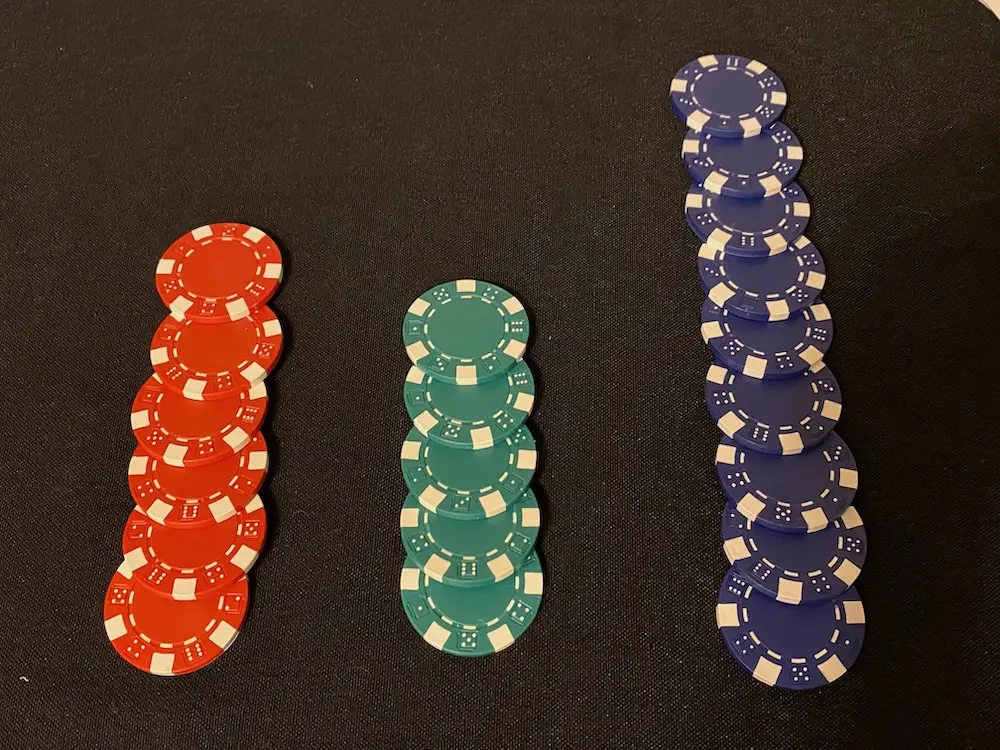
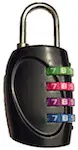
We can now count the chips of each color. There are 6 red chips, 5 green chips, and 9 blue chips. These numbers form digits of a code. The only remaining task is to determine the order of the digits. This is done by providing a sequence of colors. If you happen to have a lock with different colored dials, you could match the chip color with the dial color.
If you don’t happen to have such a lock, you can easily create a sequence of colors by drawing with markers/crayons or, like here, just some dot stickers I picked up.
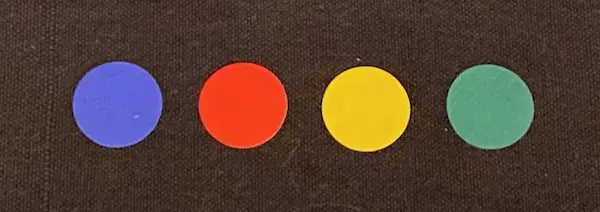
You may notice that in the example above is a dot sequence blue-red-yellow-green, but there are no yellow chips. That is partially because I had yellow stickers but no yellow chips. But this adds an interesting challenge to the puzzle. There are zero yellow chips, so that digit is 0. This makes the code 9605.
Other collections of items with different properties could similarly be used. For example, you could have a collection of coins of different denominations. You could have playing cards from different suits. You could get a book of stickers with 4 or so different patterns.